



Norwegian medical containers saving lives at the frontline
Two fully equipped medical containers have been delivered to Ukrainian forces, providing protected, front-proximate surgical capability where the need is most acute. Developed to enable rapid and safe life-saving treatment close to the frontline, these units address a critical gap in modern high-intensity warfare, where both medical units and traditional field hospitals are exposed to continuous artillery fire and precision strikes.
The delivery strengthens frontline medical capacity and shortens the time from injury to treatment, often making the decisive difference between life and death.
Photos: Fritt Ukraina & PodTown

A joint Norwegian development effort
The medical containers have been developed through close cooperation between Podtown, Ferno Norden Military Systems, and Fritt Ukraina. Podtown initiated the project and is responsible for the technical container solution, while Ferno Norden Military Systems has contributed medical system design, interior configuration, and field-proven evacuation and treatment equipment.
The project was launched in response to a clear operational reality: existing medical solutions were no longer survivable or functional under today’s threat environment near the frontline.
Mobile surgical capability close to combat operations
The medical containers function as mobile emergency treatment and surgical units that can be deployed extremely close to ongoing combat. They are engineered to withstand artillery fragments, blast overpressure, shockwaves, and extreme temperatures, while providing a stable, controlled medical environment independent of fixed infrastructure.
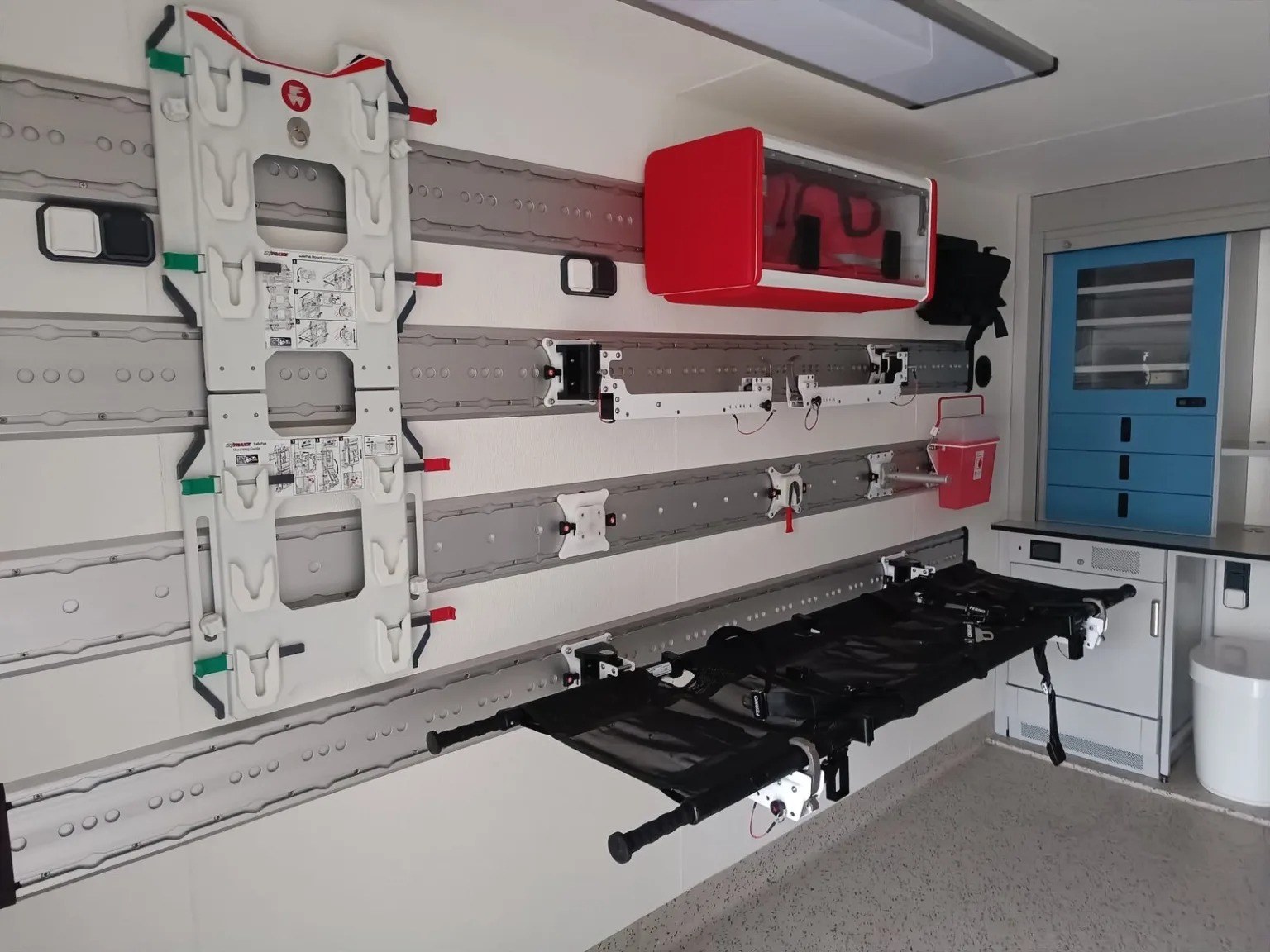
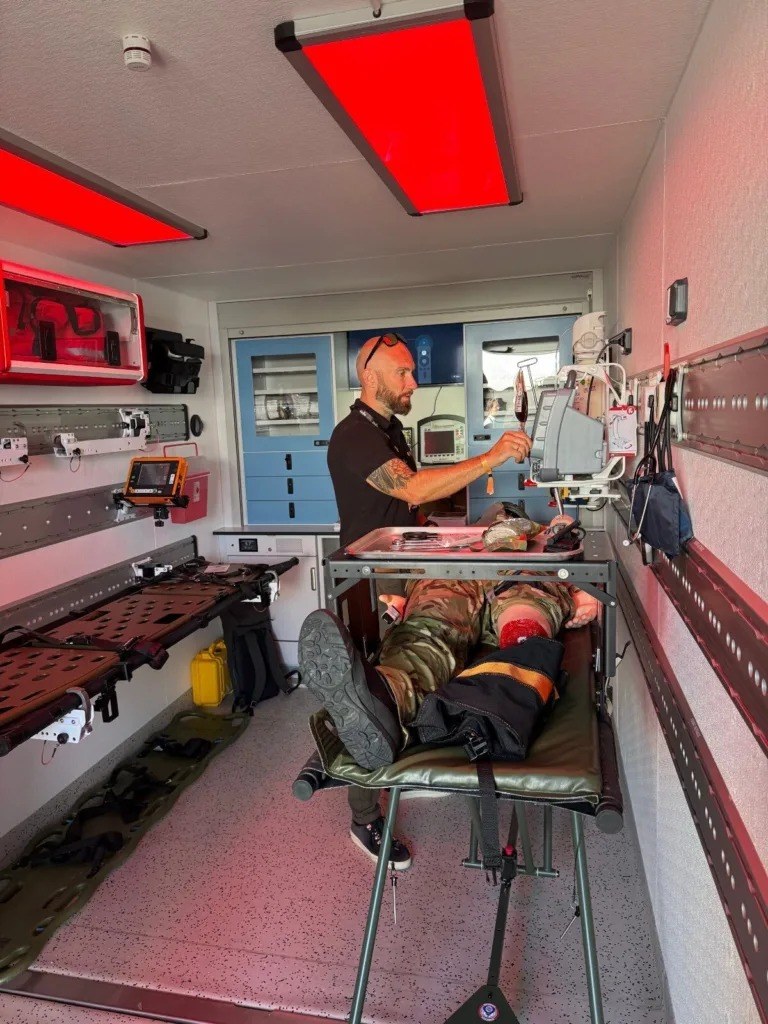
Inside, the units are configured for both acute stabilisation and surgical procedures. Each container includes operating tables, patient monitoring systems, high-intensity surgical lighting, oxygen solutions, advanced ventilation and filtration, and power supply for all critical medical equipment.
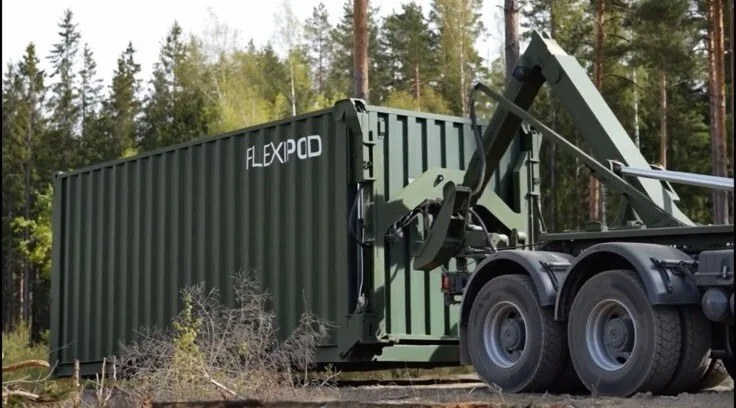
The units are designed to operate off-grid for several days and feature both white and red light modes to reduce visual signature and preserve night vision. Rapid manoeuvrability is a key design principle: the containers can be sealed and evacuated by truck within a very short timeframe if the tactical situation changes.
Flexibility, protection, and rapid deployment
The Flexipod Clinic units are based on standardised ISO containers with low visual signature, high mobility, and comprehensive ballistic protection. They can be transported by sea, road, or air, deployed within minutes, and adapted to a wide range of operational environments.
Structural components and wall systems are manufactured using materials verified through independent, full-scale military testing. These tests include extreme blast and fragmentation scenarios. Fire testing has demonstrated resistance to temperatures of 1,000°C for 45 minutes without penetration, and the containers are approved for maritime and corrosive environments, with a documented service life of up to 30 years.
Integrated energy systems, including generators or battery solutions, climate control, and air filtration, allow the units to operate autonomously for extended periods. The same base module concept can be adapted for medical treatment, command and control, or accommodation, providing forces with a scalable and trusted system architecture.
Critical support for Ukrainian medical teams
The two medical containers enable Ukrainian medical teams to perform life-saving interventions significantly closer to the frontline than previously possible. This increases survival rates for severely wounded personnel and substantially strengthens medical readiness.
The interior layout is modular and designed for rapid reconfiguration. A container can be set up as a single-patient surgical unit or as a clinic treating multiple casualties simultaneously. Wall-mounted equipment uses the Intraxx fastening system, originally developed for ambulances, allowing equipment to remain mounted at all times. The system is certified to withstand forces up to 12 G and is designed for extreme transport conditions.
The containers form a critical link in the evacuation chain between point-of-injury care and rear surgical facilities. They support Tactical Combat Casualty Care (TCCC), the internationally recognised standard for life-saving treatment under fire, focused on haemorrhage control, airway management, shock treatment, and rapid evacuation.
By enabling the transition from TCCC stabilisation into a protected surgical environment without unnecessary delay, the containers support both Damage Control Resuscitation and Damage Control Surgery. Depending on mission needs and team capability, the units can be used for rapid stabilisation, limited surgical intervention, or full open surgery.
Designed for modern warfare realities
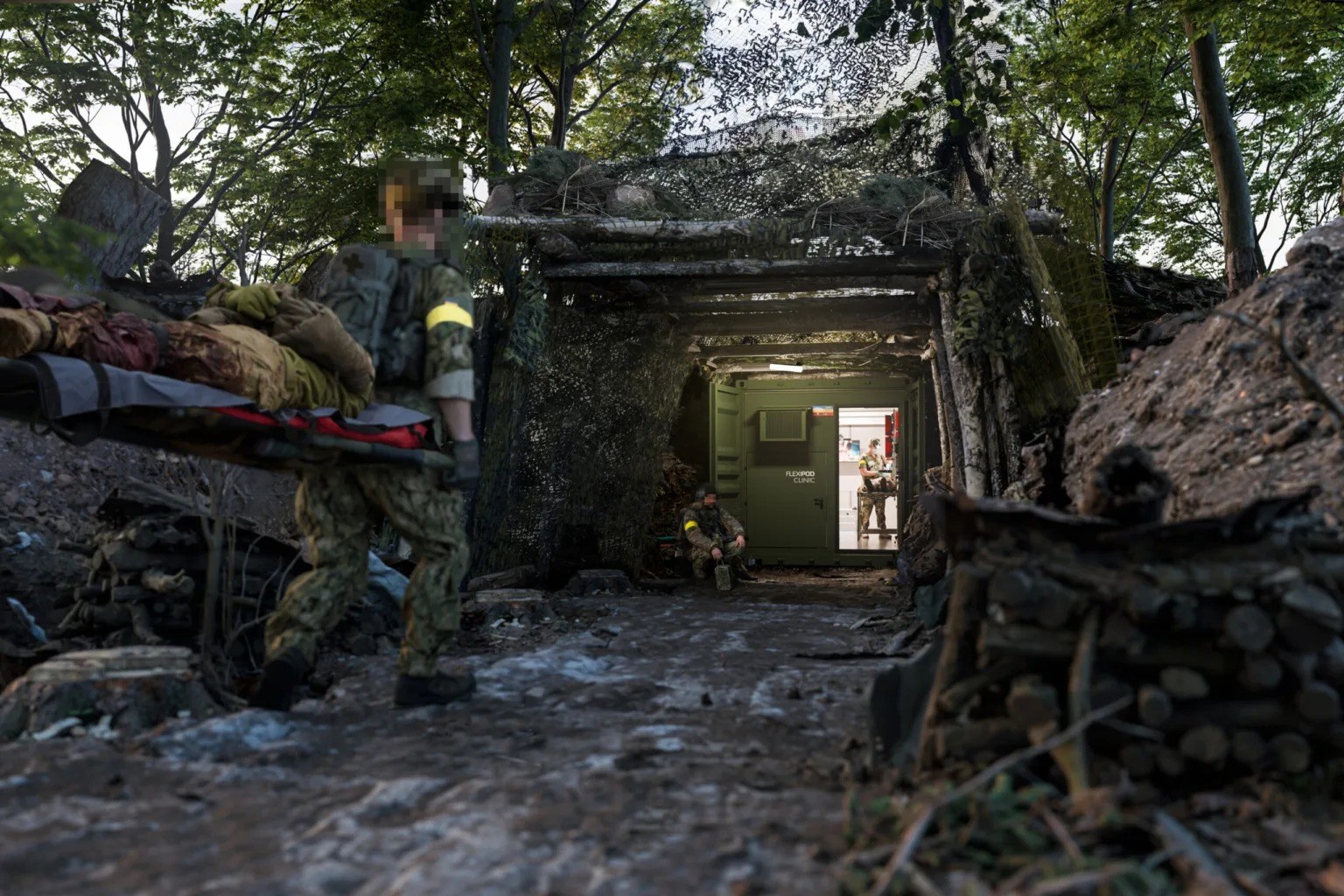
The containers can be dug in for maximum protection in static frontline positions or used as mobile assets when forces must relocate quickly. In both scenarios, they dramatically reduce transport times and increase the likelihood that critically injured soldiers survive.
The Flexipod Clinic was developed in close cooperation with experienced Ukrainian medics, Ferno Norden Military Systems, and Fritt Ukraina, ensuring the solution is directly informed by real operational needs at the frontline.
The two delivered units were financed respectively by Brann for Ukraina and the Leif and Lucy Høegh Foundation. Both were procured directly by the Ukrainian armed forces and delivered as part of Fritt Ukraina’s one-hundredth support shipment.